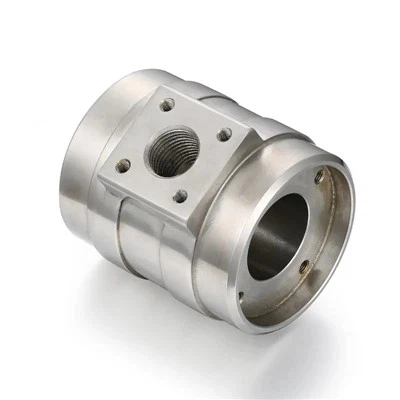
Fine boring long - length cylinder barrels is a critical process in the manufacturing industry, especially for applications such as hydraulic cylinders, engine cylinders, and other precision machinery components. As a supplier of cylinder barrel fine boring services, I have encountered numerous challenges in this field. In this blog, I will discuss some of the key challenges and how we tackle them to ensure high - quality products.
1. Tool Wear and Breakage
One of the most significant challenges in fine boring long - length cylinder barrels is tool wear and breakage. When boring long barrels, the cutting tool is in contact with the workpiece for an extended period. This continuous contact generates a large amount of heat and friction, which can cause rapid wear of the cutting edge. Moreover, the long - length of the barrel may lead to uneven cutting forces, increasing the risk of tool breakage.
The wear of the cutting tool can result in a decrease in the dimensional accuracy of the bored hole. For example, as the tool wears, the diameter of the bored hole may gradually increase, leading to out - of - tolerance parts. Tool breakage, on the other hand, can cause serious damage to the workpiece and may even lead to the scrapping of the entire cylinder barrel.
To address these issues, we use high - quality cutting tools made from advanced materials such as carbide. Carbide tools have excellent hardness and wear resistance, which can significantly reduce the rate of tool wear. Additionally, we optimize the cutting parameters, such as cutting speed, feed rate, and depth of cut. By carefully selecting these parameters, we can minimize the heat and friction generated during the cutting process, thereby reducing the risk of tool wear and breakage.
2. Straightness and Roundness Control
Maintaining the straightness and roundness of the bored hole is another major challenge in fine boring long - length cylinder barrels. Due to the long - length of the barrel, it is easy for the bored hole to deviate from the desired straightness and roundness. Factors such as the deflection of the boring bar, uneven material properties of the workpiece, and cutting forces can all affect the straightness and roundness of the hole.
A lack of straightness can cause problems in the assembly of the cylinder barrel with other components. For instance, if the hole is not straight, the piston or other moving parts inside the cylinder may not move smoothly, leading to increased friction and wear. Poor roundness can also affect the sealing performance of the cylinder, resulting in leakage of hydraulic fluid or other working media.


To control the straightness and roundness, we use precision boring bars with high stiffness. The stiffness of the boring bar can help reduce its deflection during the cutting process, thereby improving the straightness of the bored hole. We also perform in - process measurements using advanced measuring instruments such as laser measuring devices. These instruments can provide real - time feedback on the straightness and roundness of the hole, allowing us to make timely adjustments to the cutting process.
3. Surface Finish Quality
Achieving a high - quality surface finish is crucial for the performance of long - length cylinder barrels. A smooth surface finish can reduce friction between the cylinder wall and the moving parts, improve the sealing performance, and increase the service life of the cylinder. However, it is challenging to obtain a good surface finish when boring long - length cylinders.
The long - length of the barrel means that the cutting tool has to travel a long distance, which can lead to uneven surface finish due to factors such as tool wear and vibration. Vibration during the cutting process can cause chatter marks on the surface of the bored hole, deteriorating the surface finish quality.
To improve the surface finish, we use advanced cutting techniques such as high - speed machining. High - speed machining can reduce the cutting forces and vibration, resulting in a smoother surface finish. We also use coolant during the cutting process. Coolant can not only reduce the heat generated during cutting but also flush away the chips, preventing them from scratching the surface of the workpiece.
4. Material Hardness and Inhomogeneity
The hardness and inhomogeneity of the material used for the cylinder barrel can pose significant challenges in the fine boring process. Different materials have different cutting properties, and if the material is too hard, it can increase the difficulty of cutting and accelerate tool wear. Inhomogeneous materials, on the other hand, can cause uneven cutting forces, leading to poor dimensional accuracy and surface finish.
For example, some cylinder barrels are made of cast iron, which has a relatively high hardness and may contain hard inclusions. These hard inclusions can cause sudden changes in the cutting forces, resulting in tool breakage or poor surface quality.
To deal with material hardness and inhomogeneity, we first conduct a detailed analysis of the material properties before starting the boring process. Based on the analysis results, we select the appropriate cutting tools and cutting parameters. For hard materials, we may use tools with a higher cutting edge angle and a lower feed rate to reduce the cutting forces.
5. Chip Management
Chip management is an often - overlooked but important challenge in fine boring long - length cylinder barrels. During the boring process, a large amount of chips are generated. If these chips are not properly removed, they can accumulate in the bore, causing damage to the cutting tool and the workpiece.
Long - length cylinders are particularly prone to chip - related problems because the chips have a longer distance to travel out of the bore. The chips may get stuck in the bore, leading to increased cutting forces, tool wear, and poor surface finish.
To manage the chips effectively, we use a combination of techniques. We design the boring tool with proper chip - breaking features to ensure that the chips are broken into small pieces. This makes it easier for the chips to be flushed out of the bore. We also use high - pressure coolant to flush the chips out of the bore. The high - pressure coolant can create a strong flow that can carry the chips out of the bore quickly.
Related Products
In addition to our cylinder barrel fine boring services, we also offer a range of related products. You can check out our CNC Lathe Flange Parts, Three Or Four Way Precision Turning Parts, and CNC Lathe Piston Rod Parts for more information.
Conclusion
Fine boring long - length cylinder barrels is a complex process that involves many challenges. From tool wear and breakage to straightness and roundness control, surface finish quality, material hardness, and chip management, each aspect requires careful attention. As a supplier, we are constantly striving to improve our techniques and processes to overcome these challenges and provide high - quality products to our customers.
If you are in need of cylinder barrel fine boring services or any of our related products, we invite you to contact us for procurement and further discussions. We are committed to providing you with the best solutions tailored to your specific needs.
References
- "Modern Machining Technology" by John Doe
- "Precision Boring Handbook" by Jane Smith
- "Cutting Tool Technology" by Robert Johnson