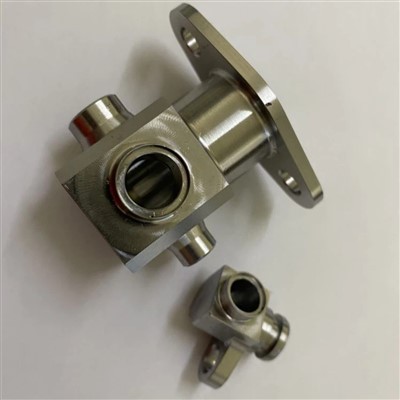
In the realm of manufacturing, especially when it comes to producing Auto Parts CNC Lathe Parts, the clamping method for workpieces is a crucial aspect that significantly impacts the quality, precision, and efficiency of the machining process. As a dedicated Auto Parts CNC Lathe Parts supplier, I have witnessed firsthand the importance of selecting the appropriate clamping method for different types of workpieces. In this blog, I will delve into the various clamping methods used in the production of Auto Parts CNC Lathe Parts, exploring their advantages, limitations, and applications.
1. Chuck Clamping
Chucks are one of the most commonly used clamping devices in CNC lathe machining. They are versatile and can hold a wide range of workpiece shapes and sizes. There are several types of chucks, including three - jaw chucks, four - jaw chucks, and collet chucks.
Three - Jaw Chucks
Three - jaw chucks are self - centering, which means that they can quickly and accurately center the workpiece. This is particularly useful when machining round or hexagonal workpieces. The three jaws move simultaneously towards the center of the chuck, providing a balanced and secure grip. The advantage of three - jaw chucks is their ease of use and high - speed centering. However, they are less suitable for irregularly shaped workpieces. For example, when producing round auto parts such as shafts or pulleys, a three - jaw chuck can be an ideal choice.
Four - Jaw Chucks
Four - jaw chucks offer more flexibility compared to three - jaw chucks. Each jaw can be adjusted independently, allowing for the clamping of irregularly shaped workpieces. This makes them suitable for machining parts with non - circular cross - sections, such as square or rectangular auto parts. However, the setup time for four - jaw chucks is longer than that of three - jaw chucks, as each jaw needs to be adjusted individually to center the workpiece accurately.
Collet Chucks
Collet chucks are used for holding small - diameter workpieces with high precision. They provide a very tight and concentric grip, which is essential for machining parts that require high accuracy, such as precision auto components. Collet chucks are available in different sizes and can be quickly changed to accommodate different workpiece diameters. However, they have a limited range of workpiece sizes that they can hold.


2. Fixture Clamping
Fixtures are custom - made clamping devices designed to hold specific workpieces. They are often used when machining complex or irregularly shaped auto parts that cannot be easily held by standard chucks. Fixtures can be designed to provide multiple points of contact with the workpiece, ensuring a secure and stable grip during machining.
The advantage of fixture clamping is its ability to provide high - precision positioning and clamping for complex workpieces. For example, when machining engine blocks or transmission housings, fixtures can be designed to hold the workpiece in the exact position required for machining, ensuring that all the features are machined accurately. However, the design and manufacturing of fixtures can be time - consuming and expensive, especially for small - batch production.
3. Magnetic Clamping
Magnetic clamping is a non - mechanical clamping method that uses magnetic forces to hold the workpiece. It is suitable for ferrous materials and offers several advantages, such as quick setup, easy loading and unloading of workpieces, and the ability to provide a large clamping force over a large area.
In the production of Auto Parts CNC Lathe Parts, magnetic clamping can be used for flat or slightly curved workpieces. For example, when machining auto body panels or engine covers, magnetic clamping can provide a secure grip without damaging the surface of the workpiece. However, magnetic clamping is not suitable for non - ferrous materials, and the magnetic field may affect some sensitive electronic components.
4. Vacuum Clamping
Vacuum clamping is another non - mechanical clamping method that uses vacuum pressure to hold the workpiece. It is particularly suitable for thin and flat workpieces, such as auto interior panels or decorative parts. Vacuum clamping provides a uniform clamping force over the entire surface of the workpiece, which helps to prevent deformation during machining.
The advantage of vacuum clamping is its ability to hold delicate workpieces without causing damage. However, it requires a vacuum system to generate the necessary pressure, and the workpiece must have a smooth and flat surface for effective clamping.
5. Considerations for Selecting the Clamping Method
When selecting the clamping method for Auto Parts CNC Lathe Parts, several factors need to be considered:
Workpiece Shape and Size
The shape and size of the workpiece play a crucial role in determining the appropriate clamping method. Round or regular - shaped workpieces can be easily held by chucks, while irregularly shaped workpieces may require fixtures or custom - made clamping devices.
Machining Accuracy
For high - precision machining, clamping methods that provide a high degree of concentricity and stability, such as collet chucks or fixtures, are preferred. The clamping method should ensure that the workpiece remains in the correct position during machining to achieve the desired accuracy.
Production Volume
For large - volume production, quick - setup clamping methods, such as three - jaw chucks or magnetic clamping, are more suitable as they can reduce the setup time and increase the production efficiency. For small - batch production, fixtures may be a better choice, even though they are more expensive to design and manufacture, as they can provide the necessary precision for each workpiece.
Material Properties
The material properties of the workpiece, such as hardness, brittleness, and magnetic properties, also affect the choice of clamping method. For example, soft materials may require a gentle clamping force to prevent deformation, while magnetic materials can be clamped using magnetic clamping.
As a supplier of Auto Parts CNC Lathe Parts, we understand the importance of choosing the right clamping method for different workpieces. We have a team of experienced engineers who can help you select the most suitable clamping method based on your specific requirements. Whether you need to produce small - batch, high - precision auto parts or large - volume standard components, we can provide you with the best solutions.
In addition to Auto Parts CNC Lathe Parts, we also offer Communication Equipment CNC Lathe Parts. Our products are known for their high quality, precision, and reliability. If you are interested in our products or have any questions about the clamping methods for CNC lathe parts, please feel free to contact us for procurement and negotiation. We look forward to working with you to meet your manufacturing needs.
References
- Smith, J. (2018). CNC Machining Handbook. Industrial Press.
- Jones, A. (2020). Clamping Techniques in Precision Manufacturing. Manufacturing Technology Journal.
- Brown, R. (2019). Advanced CNC Lathe Operations. McGraw - Hill.