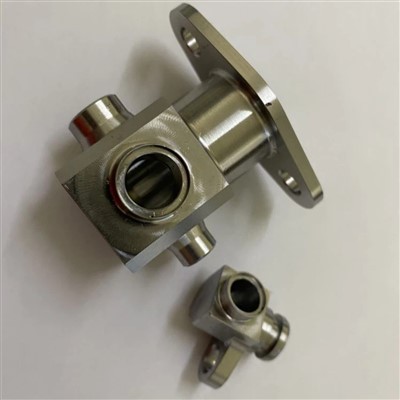
Hey there! As a supplier specializing in CNC machining of die castings, I've seen firsthand how tool geometry can have a huge impact on the whole process. Let's dive into the effects of tool geometry on CNC machining of die castings.
First off, let's talk about the cutting edge geometry. The shape and angle of the cutting edge play a crucial role in how the tool interacts with the die casting material. A sharp cutting edge can reduce the cutting force required, which means less wear and tear on the tool and a better surface finish on the part. For example, a positive rake angle can make the cutting process smoother, as it helps to shear the material more efficiently. On the other hand, a negative rake angle can provide more strength to the cutting edge, which is useful when machining hard die casting materials.
The nose radius of the tool is another important aspect of tool geometry. A larger nose radius can increase the tool's durability and reduce the risk of chipping. It also helps to improve the surface finish of the machined part. When machining die castings, a larger nose radius can be beneficial, especially when dealing with curved surfaces. This is because it can follow the contour of the part more smoothly, resulting in a better overall finish.
Flute geometry is also a key factor. The number and shape of the flutes on a tool can affect chip evacuation. In CNC machining of die castings, proper chip evacuation is essential. If the chips are not removed efficiently, they can clog the tool, leading to poor surface finish, increased cutting forces, and even tool breakage. For instance, tools with fewer flutes are generally better for roughing operations, as they can handle larger chips. Tools with more flutes, on the other hand, are better for finishing operations, as they can provide a smoother surface finish.
Now, let's consider the impact of tool geometry on the dimensional accuracy of the die castings. The right tool geometry can help to ensure that the part is machined to the correct dimensions. For example, a tool with a precise cutting edge can make more accurate cuts, reducing the margin of error. This is especially important in industries where tight tolerances are required, such as the automotive and aerospace industries.
Another aspect to consider is the tool life. Tool geometry can significantly affect how long a tool lasts. A well-designed tool with the right geometry can withstand the high cutting forces and temperatures generated during CNC machining. For example, a tool with a proper rake angle and nose radius can reduce the friction between the tool and the workpiece, which in turn can extend the tool's life. This is not only cost-effective but also helps to maintain the quality of the machined parts over time.
When it comes to the surface quality of the die castings, tool geometry is also a major factor. A tool with a smooth cutting edge and proper flute geometry can produce a better surface finish. This is important for applications where the appearance of the part is crucial, such as in consumer products. A good surface finish can also improve the functionality of the part, as it can reduce friction and wear.
Let's take a look at some real-world examples. In the production of CNC Machining Center Radiator Parts, the tool geometry needs to be carefully selected to ensure that the radiator parts are machined accurately and have a good surface finish. The cutting edge geometry and flute design can affect the heat transfer properties of the radiator, which is a critical factor in its performance.


Similarly, for Aluminum Alloy Non-standard Parts, the tool geometry can determine the machinability of the aluminum alloy. Different aluminum alloys have different properties, and the tool geometry needs to be adjusted accordingly. For example, some aluminum alloys are more prone to sticking to the tool, so a tool with a special coating or a specific cutting edge geometry may be required.
In the case of Forged And Machined Components, the tool geometry can impact the strength and integrity of the forged parts. A tool with the right geometry can help to remove the excess material without causing damage to the forged structure. This is important for ensuring the quality and reliability of the final product.
In conclusion, tool geometry has a profound impact on the CNC machining of die castings. It affects everything from the cutting force and tool life to the dimensional accuracy and surface quality of the parts. As a supplier of CNC machining of die castings, we understand the importance of selecting the right tool geometry for each specific application. If you're in the market for high-quality die castings or CNC machining services, we'd love to have a chat with you. Whether you need CNC Machining Center Radiator Parts, Aluminum Alloy Non-standard Parts, or Forged And Machined Components, we're here to provide you with the best solutions. Don't hesitate to reach out and start a conversation about your requirements.
References:
- "Tool Geometry and its Influence on Machining Processes" - Various industry research papers
- "CNC Machining Handbook" - A comprehensive guide on CNC machining techniques and tool selection