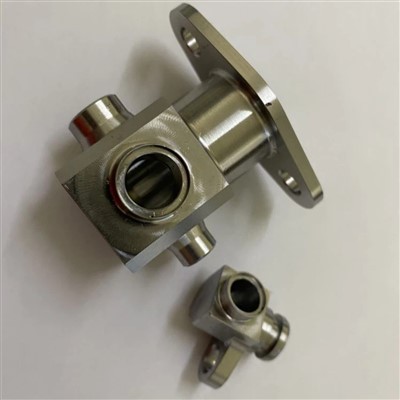
Hey there, fellow machining enthusiasts! As a supplier of CNC Lathe Cooling Nozzles, I've had my fair share of discussions about the different types of cooling nozzles out there. One of the most common questions I get is, "What's the difference between a single - fluid and two - fluid CNC lathe cooling nozzle?" Well, let's dive right into it.
Single - Fluid CNC Lathe Cooling Nozzles
First up, single - fluid cooling nozzles. These are the more traditional type of cooling nozzles used in CNC lathes. As the name suggests, they use only one fluid for cooling and lubrication. Usually, this fluid is a coolant, like water - based coolant or oil - based coolant.
The way a single - fluid nozzle works is pretty straightforward. The coolant is pumped through the nozzle at a certain pressure, and it's then directed onto the cutting area of the lathe. The main purpose of this coolant is to reduce the heat generated during the machining process. When you're cutting metal on a CNC lathe, a ton of heat is produced. This heat can cause all sorts of problems, like tool wear, poor surface finish, and even damage to the workpiece. The coolant helps to dissipate this heat, keeping the cutting tool and the workpiece at a reasonable temperature.
One of the big advantages of single - fluid nozzles is their simplicity. They're easy to install and maintain. You don't have to worry about mixing two different fluids or dealing with complex delivery systems. They're also generally more cost - effective. Since you're only using one fluid, you don't have to buy and store multiple types of fluids, which can save you some money in the long run.
However, single - fluid nozzles do have their limitations. The cooling efficiency might not be as high as that of two - fluid nozzles. The coolant might not be able to reach all the nooks and crannies of the cutting area, especially in complex machining operations. Also, the lubrication properties provided by a single - fluid coolant might not be sufficient for some high - precision machining tasks. For example, when you're doing Precision Planetary Carrier Processing, the cutting forces are high, and you need good lubrication to ensure a smooth finish and long tool life.
Two - Fluid CNC Lathe Cooling Nozzles
Now, let's talk about two - fluid cooling nozzles. These nozzles use two different fluids: air and a liquid coolant. The air and the liquid are mixed inside the nozzle or just outside it, creating a fine mist that's then sprayed onto the cutting area.
The main advantage of two - fluid nozzles is their superior cooling and lubrication capabilities. The fine mist created by the air - liquid mixture can reach every part of the cutting area, providing more effective cooling. The air in the mixture also helps to blow away the chips produced during machining, which can improve the surface finish of the workpiece.
In terms of lubrication, the two - fluid system can provide better results than a single - fluid system. The liquid coolant in the mist acts as a lubricant, reducing the friction between the cutting tool and the workpiece. This is especially important for Custom Shaft Machining, where a high - quality surface finish is crucial.
Another benefit of two - fluid nozzles is that they can use less coolant compared to single - fluid nozzles. The fine mist is more efficient at cooling and lubricating, so you don't need as much liquid coolant to achieve the same results. This can lead to cost savings in coolant consumption and waste disposal.


But, two - fluid nozzles are not without their drawbacks. They're more complex than single - fluid nozzles. You need to have a separate air supply and a system to mix the air and the liquid coolant. This means more installation and maintenance work. Also, the initial cost of a two - fluid nozzle system can be higher than that of a single - fluid system.
Which One Should You Choose?
So, which type of cooling nozzle is right for your CNC lathe? Well, it depends on your specific machining needs.
If you're doing simple machining operations, like basic turning and facing, and you're on a tight budget, a single - fluid nozzle might be the way to go. It's easy to use, cost - effective, and can handle most everyday machining tasks.
On the other hand, if you're doing high - precision machining, like Ring Gear Machining, or if you need better cooling and lubrication, a two - fluid nozzle is probably a better choice. The improved performance can justify the higher initial cost and the extra maintenance work.
Wrapping It Up
In conclusion, both single - fluid and two - fluid CNC lathe cooling nozzles have their pros and cons. As a supplier, I've seen different customers choose different types based on their unique requirements. If you're still not sure which one is right for you, don't hesitate to reach out. We can have a detailed discussion about your machining process, your budget, and your quality requirements.
Whether you're looking for a simple and cost - effective single - fluid nozzle or a high - performance two - fluid nozzle, we've got you covered. I'm here to help you make the best decision for your CNC lathe. So, if you're in the market for a new cooling nozzle, let's start a conversation. I'm ready to provide you with all the information you need and support you through the purchasing process.
References
- "CNC Machining Handbook": A comprehensive guide on CNC machining processes and equipment.
- Industry reports on CNC lathe technology advancements and best practices.