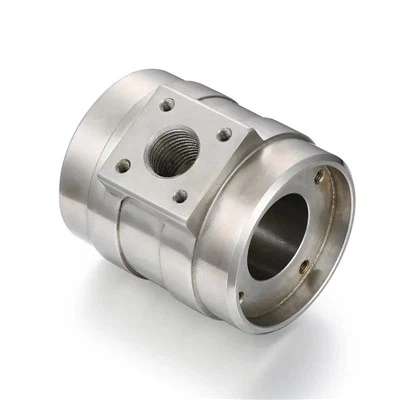
In the manufacturing industry, the toughness of CNC lathe precision shaft parts is a crucial factor that directly impacts the performance and lifespan of machinery. As a supplier of CNC Lathe Precision Shaft Parts, I have accumulated extensive experience in enhancing the toughness of these parts. In this blog, I will share some effective methods and insights based on my practical experience.
Material Selection
The choice of material is the foundation for improving the toughness of CNC lathe precision shaft parts. Different materials have different mechanical properties, and selecting the appropriate material can significantly enhance the toughness of the parts.
High - Strength Alloy Steels
High - strength alloy steels are widely used in the production of precision shaft parts. These steels contain alloying elements such as chromium, nickel, and molybdenum, which can improve the strength, hardness, and toughness of the material. For example, 4140 alloy steel is a popular choice. It has good hardenability and can achieve high strength and toughness after heat treatment. The addition of alloying elements refines the grain structure of the steel, which is beneficial for improving toughness.
Titanium Alloys
Titanium alloys are another excellent option for high - performance precision shaft parts. They have a high strength - to - weight ratio, good corrosion resistance, and excellent toughness. Titanium alloys are often used in aerospace and medical industries where high performance and reliability are required. However, the machining of titanium alloys is more difficult compared to steels, and special machining techniques and tools are needed.
Heat Treatment
Heat treatment is a key process for improving the toughness of CNC lathe precision shaft parts. Through proper heat treatment, the microstructure of the material can be adjusted, and the mechanical properties can be optimized.
Annealing
Annealing is a heat treatment process that involves heating the material to a specific temperature and then slowly cooling it. This process can relieve internal stresses, refine the grain structure, and improve the toughness of the material. For example, full annealing can be used for steels to obtain a uniform and fine - grained structure, which enhances the toughness of the shaft parts.


Quenching and Tempering
Quenching and tempering is a common heat treatment process for high - strength shaft parts. Quenching involves rapidly cooling the heated material to harden it, while tempering is carried out after quenching to reduce the brittleness and improve the toughness. By controlling the quenching and tempering parameters, such as the quenching temperature, cooling rate, and tempering temperature, the desired mechanical properties can be achieved.
Machining Process Optimization
The machining process also has a significant impact on the toughness of CNC lathe precision shaft parts. By optimizing the machining parameters and techniques, the surface quality and internal stress of the parts can be improved, thereby enhancing their toughness.
Cutting Parameters
Proper cutting parameters are essential for ensuring good machining quality. The cutting speed, feed rate, and depth of cut should be carefully selected according to the material and the requirements of the part. For example, a lower cutting speed and a smaller feed rate can reduce the cutting force and heat generation, which helps to prevent surface damage and improve the surface quality of the part. This, in turn, can enhance the toughness of the part.
Machining Tool Selection
The selection of machining tools is also crucial. High - quality cutting tools with sharp edges can reduce the cutting force and improve the machining accuracy. For example, carbide cutting tools are widely used in CNC lathe machining due to their high hardness and wear resistance. They can provide a smooth cutting surface and minimize the generation of internal stresses in the part.
Surface Treatment
Surface treatment can further improve the toughness of CNC lathe precision shaft parts. It can enhance the surface hardness, wear resistance, and corrosion resistance of the parts, which is beneficial for their overall performance.
Nitriding
Nitriding is a surface treatment process that involves introducing nitrogen into the surface layer of the part. This process can form a hard and wear - resistant nitride layer on the surface, which improves the surface hardness and wear resistance of the part. At the same time, nitriding can also improve the fatigue resistance and toughness of the part.
Coating
Applying a coating to the surface of the shaft part can also enhance its performance. For example, a diamond - like carbon (DLC) coating can provide excellent wear resistance and low friction coefficient. This can reduce the wear and tear of the part during operation, thereby improving its toughness and lifespan.
Quality Control
Quality control is an important aspect of ensuring the toughness of CNC lathe precision shaft parts. Through strict quality control measures, the quality of the parts can be guaranteed, and potential defects can be detected and corrected in time.
Non - Destructive Testing
Non - destructive testing methods, such as ultrasonic testing, magnetic particle testing, and radiographic testing, can be used to detect internal defects in the parts. These methods can help to ensure the integrity of the parts and prevent the occurrence of premature failure.
Dimensional Inspection
Accurate dimensional inspection is also necessary to ensure the proper fit and function of the parts. By using precision measuring instruments, such as coordinate measuring machines (CMMs), the dimensions of the parts can be accurately measured, and any dimensional deviations can be corrected.
Conclusion
Improving the toughness of CNC lathe precision shaft parts requires a comprehensive approach that includes material selection, heat treatment, machining process optimization, surface treatment, and quality control. As a supplier of CNC Lathe Precision Shaft Parts, we are committed to providing high - quality products with excellent toughness. Our Sealing Ring Turning and Machining Fixture Components also adhere to strict quality standards to ensure the overall performance of the mechanical systems.
If you are interested in our CNC lathe precision shaft parts or have any requirements for custom machining, please feel free to contact us for procurement negotiations. We are looking forward to working with you to meet your specific needs.
References
- ASM Handbook Volume 4: Heat Treating. ASM International.
- Machining Technology: Foundations and Recent Advances. CRC Press.
- Material Science and Engineering: An Introduction. John Wiley & Sons.