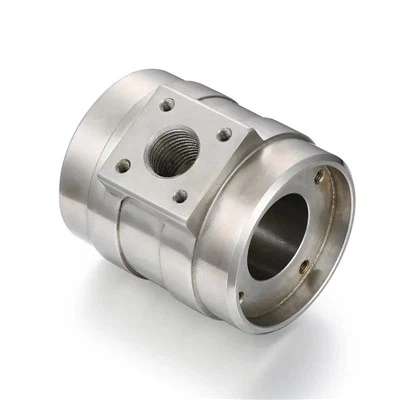
Hey there! As a supplier of Reducer Housing Processing, I'm super stoked to share with you the standard operating procedures (SOPs) for this process. These SOPs are like the secret sauce that ensures we churn out high - quality reducer housings every single time.
1. Design and Planning
First things first, we kick off with the design and planning phase. This is where the magic starts to happen. We collaborate closely with our clients to understand their specific requirements. What kind of reducer housing do they need? Is it for a high - torque application or a more lightweight one? What are the dimensional and performance specifications?
Once we've gathered all this info, our team of designers gets to work. They use state - of - the - art CAD (Computer - Aided Design) software to create detailed 3D models of the reducer housing. This allows us to visualize the final product and make any necessary adjustments before we even start the actual processing. It's like building a blueprint for a house; if the blueprint is off, the whole house might come tumbling down.
During this phase, we also consider the materials we'll use. Common materials for reducer housings include cast iron, aluminum alloys, and steel. Each material has its own pros and cons. For example, aluminum alloys are lightweight and corrosion - resistant, which is great for applications where weight is a concern. You can check out Aluminum Alloy Non - standard Parts to learn more about the options available.
2. Material Selection and Preparation
After the design is finalized, it's time to select the right material. We source our materials from trusted suppliers to ensure their quality. Once the materials arrive at our facility, we conduct a thorough inspection. We check for any defects, such as cracks or impurities, that could affect the performance of the reducer housing.
If the material needs to be cut to size, we use precision cutting tools. For instance, if we're working with a large piece of metal, we might use a saw or a laser cutter to get the right dimensions. This step is crucial because it sets the foundation for the rest of the processing.
3. Machining
Now, let's talk about machining. This is where the raw material starts to take the shape of a reducer housing. We use a variety of machining techniques, and one of the most common ones is CNC (Computer Numerical Control) machining. CNC machining offers a high level of precision and repeatability.
In CNC machining, we program the machine to perform specific operations on the material. For example, we can use it to drill holes, mill surfaces, and turn the material to achieve the desired shape. The advantage of CNC machining is that it can produce complex shapes with great accuracy. You can find more about CNC Machined Housings on our website.
We also use other machining processes like turning, milling, and boring. Turning is used to create cylindrical shapes, while milling is great for creating flat surfaces and complex profiles. Boring is used to enlarge existing holes to a precise diameter.


4. Heat Treatment
Heat treatment is an important step in the reducer housing processing. It helps to improve the mechanical properties of the material, such as hardness, strength, and toughness. There are different types of heat treatment processes, including annealing, quenching, and tempering.
Annealing is used to soften the material, making it easier to machine. Quenching involves rapidly cooling the material to increase its hardness. After quenching, the material can be quite brittle, so we follow it up with tempering to reduce the brittleness and improve its toughness.
5. Surface Finishing
Once the machining and heat treatment are done, it's time for surface finishing. This step not only enhances the appearance of the reducer housing but also protects it from corrosion and wear. We use various surface finishing techniques, such as sandblasting, painting, and plating.
Sandblasting is used to clean the surface of the housing and create a rough texture, which can improve the adhesion of paint or other coatings. Painting provides a protective layer and can also give the housing a nice aesthetic look. Plating, such as chrome plating or nickel plating, can further enhance the corrosion resistance of the housing.
6. Quality Control
Quality control is at the heart of our Reducer Housing Processing. We have a strict quality control system in place to ensure that every reducer housing meets our high standards. We use a combination of manual and automated inspection methods.
We use measuring tools like calipers, micrometers, and coordinate measuring machines (CMMs) to check the dimensions of the housing. We also conduct non - destructive testing, such as ultrasonic testing and magnetic particle testing, to detect any internal defects. If a housing doesn't meet our quality standards, we either rework it or scrap it.
7. Assembly and Testing
After the housing passes the quality control checks, it's time for assembly. We assemble the reducer housing with other components, such as gears, bearings, and seals. This requires a high level of precision to ensure that all the components fit together properly.
Once the assembly is complete, we conduct a series of tests. We test the performance of the reducer, including its torque, speed, and efficiency. We also check for any leaks or abnormal noises. Only after the housing passes all the tests is it ready to be shipped to our clients.
8. Packaging and Shipping
The final step in our process is packaging and shipping. We use high - quality packaging materials to protect the reducer housing during transit. We make sure that the housing is well - padded and secured to prevent any damage.
We work with reliable shipping partners to ensure that the housing is delivered to our clients in a timely manner. We also provide tracking information so that our clients can keep an eye on the progress of their order.
If you're in the market for high - quality reducer housings, we'd love to have a chat with you. Whether you need a small batch for a prototype or a large order for mass production, we've got you covered. Our team of experts is ready to assist you with all your reducer housing needs. Just reach out to us and let's start a conversation about your project.
References
- Manufacturing Technology Handbook
- Metalworking and Metal Forming Guide
- Precision Machining Best Practices