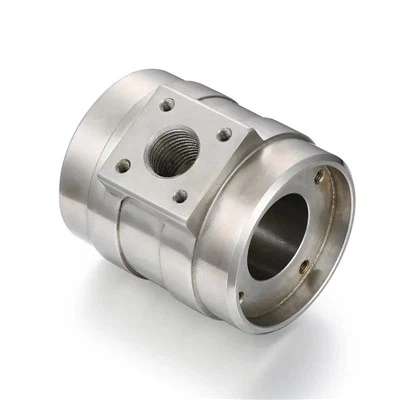
As a supplier in the field of Mechanical Parts Processing, I've witnessed firsthand the unique set of challenges that come with handling large - scale parts. In this blog, I'll delve into the problems we often encounter in the mechanical parts processing of large - scale components.
Material Selection and Procurement
One of the initial hurdles in large - scale mechanical parts processing is material selection. Large parts require significant amounts of material, and choosing the wrong type can have far - reaching consequences. For instance, when dealing with large structural components for heavy machinery, the material must have high strength and toughness to withstand the immense loads. However, high - performance materials often come with a hefty price tag, which can significantly increase the overall cost of production.
Moreover, procuring large quantities of materials can be a logistical nightmare. There may be shortages in the market, especially for specialized alloys or high - quality steels. Delays in material procurement can disrupt the entire production schedule. For large - scale parts, even a minor delay in getting the right material can cause a domino effect, pushing back the delivery date to the customer. This not only affects our reputation as a Mechanical Parts Processing supplier but also incurs additional costs such as storage fees and idle labor.
Machining Accuracy
Achieving high machining accuracy is a constant struggle in large - scale parts processing. Large parts have a greater surface area and volume, which means there are more opportunities for errors to occur. During the machining process, factors like thermal expansion can have a significant impact on the final dimensions of the part. As the cutting tool generates heat while removing material, the large part can expand, leading to dimensional inaccuracies.
Another issue is the deflection of the workpiece. When machining large parts, the force exerted by the cutting tool can cause the workpiece to bend or deform. This is particularly problematic for long and thin components. For example, in the case of large shafts used in industrial equipment, even a small amount of deflection can result in out - of - tolerance dimensions, which can affect the overall performance of the machinery.
In addition, maintaining the accuracy of the machining equipment itself becomes more challenging with large - scale parts. The wear and tear on the machine tools increase due to the heavy workload and long machining times. Regular calibration and maintenance are necessary, but even with the best care, some equipment may not be able to achieve the same level of accuracy for large parts as they can for smaller ones.
Handling and Transportation
Handling large - scale mechanical parts is no easy feat. These parts are often extremely heavy and bulky, requiring specialized equipment such as cranes, forklifts, and large - scale conveyors. Moving these parts within the factory floor can be dangerous if proper safety protocols are not followed. There is a risk of accidents, such as parts falling or colliding with other equipment, which can cause damage to the parts, the machinery, and even pose a threat to the workers' safety.
Once the parts are processed, transportation becomes another major problem. Shipping large - scale parts requires large - capacity trucks, trailers, or even shipping containers. Coordinating the logistics of transporting these parts to the customer's location can be a complex task. There are restrictions on the size and weight of the loads that can be transported on public roads, and obtaining the necessary permits can be time - consuming and expensive. Moreover, long - distance transportation can expose the parts to vibrations, shocks, and environmental factors, which may cause damage to the parts during transit.
Cost Management
Cost management is a critical issue in large - scale mechanical parts processing. As mentioned earlier, the cost of materials is a significant factor. But there are other cost - related problems as well. The machining of large parts often requires more time and energy compared to smaller parts. The cutting tools used for large - scale machining wear out faster due to the heavy cutting forces, and replacing these tools can be costly.
In addition, the overhead costs associated with large - scale production are higher. The factory space required to store and process large parts is greater, which leads to higher rent and utility bills. The labor cost is also a major consideration, as more workers may be needed to handle the large parts during machining, handling, and transportation.
Quality Control
Ensuring the quality of large - scale mechanical parts is a complex process. Quality control inspections for large parts are more difficult and time - consuming than for smaller parts. Non - destructive testing methods, such as ultrasonic testing and magnetic particle testing, need to be carefully applied to cover the entire surface and internal structure of the large part. However, these testing methods may have limitations in detecting defects in large and complex parts.
Visual inspections are also challenging due to the large size of the parts. It may be impossible to inspect every square inch of the part manually. Automated inspection systems can help, but they need to be calibrated and maintained properly to ensure accurate results. Any undetected defects in large - scale parts can lead to catastrophic failures in the final application, which can have serious consequences for the end - user and our reputation as a Mechanical Parts Processing supplier.
Design and Customization
Large - scale mechanical parts often require a high degree of customization to meet the specific needs of the customer. Designing these parts can be a complex process, as the engineers need to consider factors such as the load - bearing capacity, the operating environment, and the compatibility with other components in the machinery. Any design errors can lead to costly rework or even render the part unusable.
Moreover, customizing large - scale parts can increase the production time and cost. The machining processes may need to be adjusted to accommodate the unique design requirements, and new tooling may need to be developed. This can be a significant challenge, especially when dealing with tight deadlines and budget constraints.
Conclusion
In conclusion, the mechanical parts processing of large - scale parts is fraught with difficulties. From material selection and procurement to quality control and design, each stage of the production process presents unique problems. However, as a dedicated Mechanical Parts Processing supplier, we are committed to overcoming these challenges. We have invested in advanced machinery, skilled personnel, and robust quality control systems to ensure that we can provide high - quality large - scale mechanical parts to our customers.
If you are in need of Machining Custom Parts or Double - Side Lapping Seal Parts, we invite you to contact us for a detailed procurement discussion. We look forward to working with you to meet your specific requirements and provide the best solutions for your mechanical parts processing needs.
References
- Smith, J., "Advanced Machining Techniques for Large - Scale Components", Manufacturing Journal, 2018.
- Johnson, R., "Material Selection in Heavy - Duty Mechanical Parts Production", Materials Science Review, 2019.
- Brown, A., "Quality Control in Large - Scale Manufacturing", Industrial Quality Management, 2020.