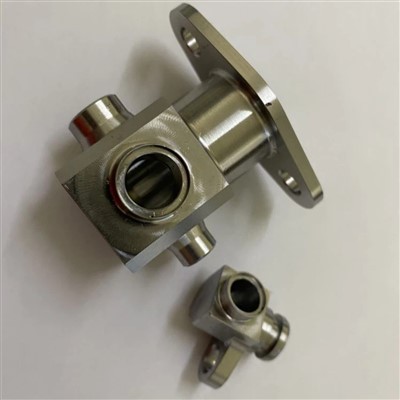
In the realm of valve body manufacturing, ensuring the consistency of CNC machining across different batches is a critical challenge that directly impacts product quality, customer satisfaction, and overall business success. As a leading supplier of Valve Body CNC Machining, we understand the significance of maintaining high - quality standards and consistency in every production run. In this blog, we will explore the key strategies and best practices to achieve this goal.
Understanding the Importance of Consistency in Valve Body CNC Machining
Valve bodies are essential components in various industries, including automotive, aerospace, and industrial machinery. These components need to meet strict specifications and performance requirements. Inconsistencies in machining can lead to issues such as leakage, improper flow control, and reduced lifespan of the valve. Ensuring consistency across different batches is crucial for maintaining the reliability and functionality of the final product.
Key Factors Affecting Consistency
Machine Calibration and Maintenance
The first step in ensuring consistent machining is to keep the CNC machines in optimal condition. Regular calibration of the machines is necessary to ensure accurate positioning and movement of the cutting tools. This includes checking the linear axes, spindle speed, and tool offsets. Any deviation in these parameters can lead to variations in the machined parts.
We recommend creating a comprehensive maintenance schedule for the CNC machines. This schedule should include daily, weekly, and monthly checks. For example, daily checks can involve inspecting the coolant levels, lubrication, and the condition of the cutting tools. Weekly checks can focus on the accuracy of the machine's positioning system, and monthly checks can include a more in - depth analysis of the machine's overall performance.
Tool Management
The quality and condition of the cutting tools play a significant role in the consistency of CNC machining. Dull or worn - out tools can cause variations in the surface finish, dimensional accuracy, and chip formation. It is essential to have a proper tool management system in place.
This system should include tool selection based on the material of the valve body and the machining operation. For example, when machining stainless - steel valve bodies, carbide tools are often preferred due to their high hardness and wear resistance. Additionally, regular tool replacement schedules should be established to ensure that the tools are always in good condition.
Material Selection and Quality
The quality of the raw material used for valve body machining can also affect the consistency of the final product. Different batches of the same material may have variations in composition, hardness, and grain structure. These variations can lead to differences in machining performance and the final dimensions of the valve body.
We recommend working closely with reliable material suppliers to ensure the consistency of the raw materials. Conducting incoming material inspections can help identify any potential issues before the machining process begins. For example, hardness testing and chemical analysis can be performed to verify the quality of the material.
Programming and Process Optimization
The CNC programming is the heart of the machining process. A well - written program can ensure consistent machining results. It is important to optimize the programming to minimize the number of tool changes, reduce machining time, and improve the overall efficiency of the process.
Using simulation software can be a valuable tool in the programming process. This software allows us to visualize the machining process and identify any potential issues before the actual machining begins. By simulating different scenarios, we can optimize the cutting parameters, such as feed rate, spindle speed, and depth of cut, to achieve the best results.
Implementing Quality Control Measures
In - Process Inspection
In - process inspection is a crucial step in ensuring consistency across different batches. By inspecting the parts at various stages of the machining process, we can identify any potential issues early and take corrective actions. This can include checking the dimensions, surface finish, and geometric tolerances of the parts.
We recommend using advanced inspection equipment, such as coordinate measuring machines (CMMs) and optical inspection systems. These tools can provide accurate and reliable measurements, allowing us to detect even the smallest deviations from the specifications.
Statistical Process Control (SPC)
Statistical Process Control is a powerful tool for monitoring and controlling the machining process. By collecting and analyzing data from the production process, we can identify trends and patterns that may indicate potential issues. SPC can help us determine if the process is in control and make adjustments as needed.
For example, we can use control charts to monitor the key process parameters, such as dimensional tolerances and surface finish. If the data points fall outside the control limits, it indicates that the process may be out of control, and corrective actions need to be taken.


Post - Process Inspection
After the machining process is complete, a final inspection should be conducted to ensure that the valve bodies meet the required specifications. This inspection can include a visual inspection, dimensional measurement, and functional testing.
Functional testing is particularly important for valve bodies, as it ensures that the valves operate correctly under different conditions. For example, pressure testing can be performed to check for leakage and proper flow control.
Training and Skill Development
The skills and knowledge of the operators play a crucial role in ensuring consistent CNC machining. It is important to provide regular training to the operators to keep them updated with the latest machining techniques and technologies.
Training programs can include theoretical and practical components. Theoretical training can cover topics such as CNC programming, machine operation, and quality control. Practical training can involve hands - on experience with the CNC machines and inspection equipment.
Supplier Collaboration
As a Valve Body CNC Machining supplier, we understand the importance of collaborating with our suppliers. By working closely with our tool suppliers, material suppliers, and other partners, we can ensure the consistency of the entire supply chain.
For example, we can work with tool suppliers to develop custom - made cutting tools that are optimized for our specific machining requirements. We can also collaborate with material suppliers to ensure the consistent quality of the raw materials.
Conclusion
Ensuring the consistency of valve body CNC machining across different batches is a complex but achievable goal. By focusing on machine calibration and maintenance, tool management, material selection, programming optimization, quality control measures, training, and supplier collaboration, we can achieve high - quality and consistent results.
If you are in the market for high - quality CNC Machined Parts, Automotive Aluminum Die Casting, or Precision Aluminum Casting Parts, we are here to provide you with the best solutions. We invite you to contact us for procurement and to discuss your specific requirements.
References
- Smith, J. (2018). CNC Machining Handbook. Industrial Press.
- Jones, R. (2019). Quality Control in Manufacturing. Wiley.
- Brown, A. (2020). Tool Management for CNC Machining. Machining Technology Press.