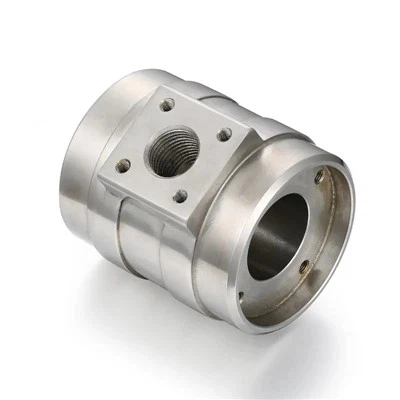
In the realm of modern manufacturing, CNC lathe machining stands as a cornerstone technology, enabling the production of high - precision parts across various industries. As a supplier of CNC lathe machining parts, I've witnessed firsthand the critical role that tool wear monitoring plays in this intricate process.
The Basics of CNC Lathe Machining
CNC (Computer Numerical Control) lathe machining is a subtractive manufacturing process where a cutting tool removes material from a rotating workpiece. This technology offers unparalleled precision, repeatability, and efficiency compared to traditional manual machining methods. Our company specializes in producing a wide range of parts, such as Cylinder Barrel Fine Boring, Precision Planetary Carrier Processing, and CNC Lathe Piston Rod Parts. These parts are used in diverse applications, from automotive engines to aerospace components.
Understanding Tool Wear
Tool wear is an inevitable phenomenon in CNC lathe machining. As the cutting tool interacts with the workpiece, it experiences mechanical and thermal stresses, leading to gradual material loss. There are several types of tool wear, including flank wear, crater wear, and notch wear. Flank wear occurs on the relief face of the tool, while crater wear forms on the rake face. Notch wear is typically observed at the depth - of - cut line.
The rate of tool wear is influenced by multiple factors. The material properties of the workpiece, such as hardness, toughness, and abrasiveness, play a significant role. For example, machining hardened steel will cause more rapid tool wear compared to softer materials like aluminum. Cutting parameters, including cutting speed, feed rate, and depth of cut, also have a direct impact on tool wear. Higher cutting speeds and feed rates generally lead to increased wear, as they generate more heat and mechanical stress on the tool.
The Importance of Tool Wear Monitoring
Quality Assurance
One of the primary reasons for tool wear monitoring is to ensure the quality of the machined parts. As the tool wears, its cutting edge becomes dull, which can lead to dimensional inaccuracies in the parts. For instance, in the production of CNC Lathe Piston Rod Parts, even a slight deviation in diameter can affect the performance of the piston in an engine. By monitoring tool wear, we can detect when the tool is approaching the end of its useful life and replace it before it causes quality issues.
Surface finish is another critical aspect of part quality. A worn - out tool may produce a rough surface finish on the workpiece, which can be unacceptable in applications where smooth surfaces are required, such as in the Cylinder Barrel Fine Boring process. Monitoring tool wear allows us to maintain the desired surface finish throughout the machining process.


Cost - Efficiency
Tool wear monitoring can significantly reduce production costs. Tools are expensive, and replacing them prematurely can lead to unnecessary expenses. On the other hand, using a worn - out tool for too long can result in scrap parts, which also adds to the cost. By accurately monitoring tool wear, we can optimize tool usage, ensuring that tools are replaced at the right time.
In addition, tool wear can increase power consumption during machining. As the tool becomes dull, more energy is required to remove material from the workpiece. By monitoring tool wear and replacing tools when necessary, we can reduce power consumption, leading to lower energy costs in the long run.
Productivity Enhancement
Unplanned tool failures can cause significant downtime in the production process. When a tool breaks during machining, the machine has to be stopped, the broken tool removed, and a new tool installed and calibrated. This not only wastes time but also disrupts the production schedule. Tool wear monitoring can help predict tool failures in advance, allowing us to schedule tool changes during planned maintenance intervals.
Moreover, by maintaining optimal tool conditions, we can run the CNC lathe at higher cutting parameters without sacrificing part quality. This can increase the material removal rate and, consequently, improve overall productivity. For example, in the Precision Planetary Carrier Processing, efficient tool management through wear monitoring enables us to produce more parts in less time.
Methods of Tool Wear Monitoring
There are several methods available for tool wear monitoring. Direct methods involve physically measuring the tool wear using techniques such as optical microscopy, profilometry, or laser scanning. These methods provide accurate information about the tool wear but are often time - consuming and require the machine to be stopped.
Indirect methods, on the other hand, monitor the machining process parameters to infer tool wear. For example, monitoring cutting forces can provide insights into tool wear. As the tool wears, the cutting forces increase due to the dulling of the cutting edge. Similarly, monitoring power consumption, vibration, and acoustic emission can also indicate the state of tool wear. These methods can be implemented in real - time during the machining process, allowing for immediate feedback and proactive tool management.
Challenges in Tool Wear Monitoring
Despite its importance, tool wear monitoring is not without challenges. One of the main challenges is the complexity of the machining process. The relationship between tool wear and process parameters is often nonlinear and influenced by multiple factors, making it difficult to accurately predict tool wear.
Another challenge is the cost and complexity of the monitoring systems. High - precision monitoring equipment can be expensive, and implementing a comprehensive tool wear monitoring system requires significant investment in terms of hardware, software, and training.
Conclusion
Tool wear monitoring is of utmost importance in CNC lathe machining parts. As a supplier of Cylinder Barrel Fine Boring, Precision Planetary Carrier Processing, and CNC Lathe Piston Rod Parts, we understand that it is crucial for ensuring part quality, reducing costs, and enhancing productivity. Although there are challenges in implementing effective tool wear monitoring systems, the benefits far outweigh the difficulties.
If you are in need of high - quality CNC lathe machining parts, we invite you to contact us for procurement discussions. Our team of experts is ready to work with you to meet your specific requirements.
References
- Altintas, Y. (2000). Manufacturing Automation: Metal Cutting Mechanics, Machine Tool Vibrations, and CNC Design. Cambridge University Press.
- Astakhov, V. P. (2006). Metal Cutting Mechanics: An Integrated Approach to Analysis, Modeling, and Design of Cutting Tools. CRC Press.
- Byington, C. S., Inman, D. J., & Staszewski, W. J. (2005). Damage identification and health monitoring of structural and mechanical systems from changes in their vibration characteristics: A literature review. Shock and Vibration Digest, 37(3), 191 - 214.