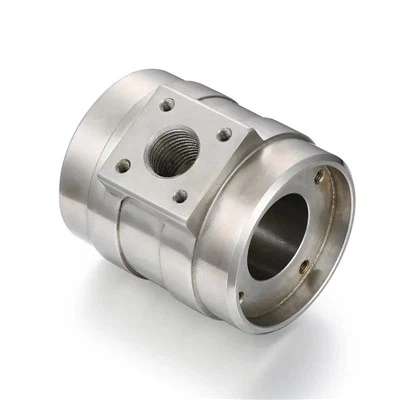
As a supplier specializing in Sealing Ring Turning, I've encountered numerous challenges and discovered effective strategies to boost the efficiency of this process. In this blog, I'll share some practical tips and insights that can help you optimize your sealing ring turning operations.

Understanding the Basics of Sealing Ring Turning
Before we dive into the efficiency - boosting techniques, let's briefly understand what sealing ring turning is. Sealing rings are crucial components used in various industries, such as automotive, aerospace, and manufacturing. Turning is a machining process where a cutting tool removes material from a rotating workpiece to create the desired shape of the sealing ring.
Selecting the Right Materials
The choice of materials for sealing rings plays a significant role in the turning process. Different materials have different properties, such as hardness, ductility, and thermal conductivity. For example, rubber - based sealing rings require different cutting tools and machining parameters compared to metal - based ones.
When selecting materials, consider the application of the sealing ring. If it's for high - pressure applications, you might need a more durable and heat - resistant material. As a supplier, I've found that working closely with customers to understand their specific requirements helps in choosing the most suitable material. This not only ensures the quality of the final product but also streamlines the turning process.
Optimizing Cutting Tools
The cutting tools you use can make or break the efficiency of sealing ring turning. High - quality cutting tools are essential for achieving precise cuts and reducing machining time. Carbide cutting tools are a popular choice due to their hardness and wear resistance. They can maintain sharp edges for longer periods, which means less frequent tool changes.
Another important aspect is the geometry of the cutting tool. The right tool geometry can reduce cutting forces, improve chip formation, and enhance surface finish. For instance, a tool with a positive rake angle can reduce cutting forces, making the turning process smoother. As a supplier, I always recommend customers to invest in high - quality cutting tools and keep them well - maintained.
Setting the Right Machining Parameters
Machining parameters such as cutting speed, feed rate, and depth of cut are critical for efficient sealing ring turning. These parameters need to be carefully adjusted based on the material of the workpiece and the type of cutting tool.
Cutting speed refers to how fast the cutting tool moves relative to the workpiece. A higher cutting speed can increase productivity, but it also generates more heat, which can affect the tool life and the quality of the finished product. Feed rate is the distance the cutting tool advances per revolution of the workpiece. A proper feed rate ensures efficient material removal without causing excessive tool wear. Depth of cut is the thickness of the material removed in each pass. It should be set according to the strength of the cutting tool and the material being machined.
As a supplier, I often provide customers with guidelines on setting these parameters based on our experience. By fine - tuning these parameters, you can significantly improve the efficiency of the turning process.
Implementing Advanced Technologies
In today's digital age, advanced technologies can greatly enhance the efficiency of sealing ring turning. Computer Numerical Control (CNC) machines are a game - changer in the machining industry. They offer high precision, repeatability, and the ability to automate the turning process.
With CNC machines, you can program the exact dimensions and specifications of the sealing ring, eliminating the need for manual adjustments. This not only reduces human error but also speeds up the production process. Additionally, some CNC machines are equipped with advanced sensors that can monitor the cutting process in real - time, allowing for immediate adjustments if any issues arise.
Another technology that can be beneficial is the use of simulation software. Simulation software allows you to test different machining strategies and parameters before actually starting the turning process. This helps in identifying potential problems and optimizing the process, saving both time and resources.
Quality Control and Inspection
Quality control is an integral part of the sealing ring turning process. Regular inspections during and after the turning process can help identify any defects early on, preventing costly rework and delays.
Non - destructive testing methods, such as ultrasonic testing and X - ray inspection, can be used to detect internal defects in the sealing rings. Visual inspections can also be carried out to check for surface finish, dimensional accuracy, and any signs of damage.
As a supplier, I have a strict quality control system in place. We conduct multiple inspections at different stages of the production process to ensure that every sealing ring meets the highest quality standards. This not only builds trust with our customers but also reduces the chances of returns and complaints.
Training and Skill Development
The skills and knowledge of the operators play a crucial role in the efficiency of sealing ring turning. Providing proper training to your operators can significantly improve their performance.
Training should cover aspects such as machine operation, tool selection, parameter setting, and quality control. Regular training sessions can help operators stay updated with the latest technologies and best practices in the industry.
As a supplier, I often offer training programs to our customers' operators. This helps them make the most of our products and services, and also ensures that the turning process is carried out efficiently.
Collaboration and Communication
Collaboration between different departments, such as engineering, production, and quality control, is essential for efficient sealing ring turning. Effective communication can help in sharing information, identifying problems, and finding solutions quickly.
For example, the engineering department can provide valuable insights into the design and material selection of the sealing rings. The production department can then use this information to optimize the turning process. The quality control department can ensure that the final product meets the required standards.
As a supplier, I believe in building strong relationships with our customers. We work closely with them to understand their needs and provide customized solutions. This collaborative approach not only improves the efficiency of the turning process but also enhances customer satisfaction.
Conclusion
Improving the efficiency of sealing ring turning requires a holistic approach that involves material selection, cutting tool optimization, parameter setting, technology implementation, quality control, training, and collaboration. By following these tips, you can streamline your operations, reduce costs, and increase productivity.
If you're interested in Sealing Ring Turning, Ring Gear Machining, or Semiconductor CNC Machining, feel free to reach out to us for more information and to discuss your specific requirements. We're here to help you achieve the best results in your machining operations.
References
- "Machining Handbook" by Industrial Press Inc.
- "Modern Machining Technology" by John A. Schey.