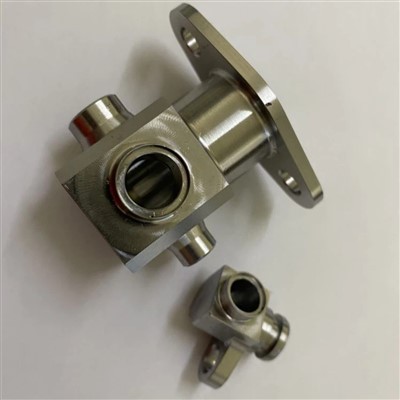
Hey there! As a supplier of CNC machined parts, I often get asked if these parts can be used in medical devices. Well, the short answer is yes, and in this blog, I'll dive into the details of why and how CNC machined parts play a crucial role in the medical field.
Why CNC Machined Parts are a Great Fit for Medical Devices
First off, let's talk about the precision that CNC machining offers. In the medical industry, precision is non - negotiable. Whether it's a surgical instrument or a diagnostic device, even the slightest deviation can have serious consequences. CNC machining uses computer - controlled tools to create parts with extremely high accuracy. This means that the parts can be made to exact specifications, ensuring a perfect fit and function within the medical device.
Another big advantage is the repeatability of CNC machining. Once a design is programmed into the CNC machine, it can produce identical parts over and over again. This is super important in the medical field, where consistency is key. For example, if a hospital needs a large number of a specific type of medical implant, CNC machining can ensure that each implant is exactly the same, which is crucial for patient safety and treatment effectiveness.
CNC machining also allows for a wide range of materials to be used. In medical devices, different materials are required depending on the application. For instance, titanium is often used for implants because of its biocompatibility and strength. Stainless steel is another popular choice for surgical instruments due to its corrosion resistance and durability. With CNC machining, we can work with these and many other materials to create parts that meet the specific requirements of medical devices.
Applications of CNC Machined Parts in Medical Devices
Surgical Instruments
Surgical instruments need to be precise, sharp, and reliable. CNC machining can create high - quality surgical tools such as scalpels, forceps, and retractors. The ability to machine complex shapes and small features is especially useful in creating these instruments. For example, the tips of forceps can be machined to a very fine point, allowing for delicate surgical procedures.
Medical Implants
Medical implants, like hip and knee replacements, require a high level of precision and biocompatibility. CNC machining can produce implants with the exact shape and dimensions needed to fit the patient's body. The smooth surface finish that can be achieved through CNC machining also helps to reduce the risk of infection and improve the overall performance of the implant.
Diagnostic Equipment
Diagnostic equipment such as MRI machines, CT scanners, and ultrasound devices rely on precision parts. CNC machined parts are used in the construction of these machines to ensure accurate and reliable operation. For example, the components that control the movement of the imaging sensors need to be machined with high precision to ensure clear and accurate images.
Quality Control in CNC Machined Parts for Medical Devices
When it comes to medical devices, quality control is of the utmost importance. At our company, we have a strict quality control process in place. We use advanced inspection tools such as coordinate measuring machines (CMM) to ensure that each part meets the required specifications. This includes checking dimensions, surface finish, and material properties.

We also follow all relevant industry standards and regulations. For example, in the United States, medical devices are regulated by the Food and Drug Administration (FDA). We make sure that our CNC machined parts comply with all FDA requirements to ensure the safety and effectiveness of the medical devices they are used in.
Challenges and Solutions in Using CNC Machined Parts in Medical Devices
One of the challenges in using CNC machined parts in medical devices is the high cost of production. CNC machining requires expensive equipment and skilled operators. However, we have found ways to optimize our production processes to reduce costs without sacrificing quality. For example, we use advanced software to plan the machining process more efficiently, which reduces waste and saves time.
Another challenge is the need for strict traceability. In the medical industry, it's important to be able to trace the origin of each part in case of a problem. We use a comprehensive tracking system to keep records of all the materials and processes used in the production of our CNC machined parts. This allows us to quickly identify and address any issues that may arise.
Our Services as a CNC Machined Parts Supplier
As a supplier of CNC machined parts, we offer a wide range of services. We can work with you from the design stage to help you optimize your part for CNC machining. Our team of experienced engineers can provide advice on material selection, design for manufacturability, and cost - effective solutions.
We also offer a variety of machining processes, including milling, turning, and drilling. Whether you need a simple part or a complex component, we have the capabilities to meet your needs. And if you're interested in specific machining services, you can check out Hydraulic Manifold Machining, Precision Planetary Carrier Processing, and Semiconductor CNC Machining.
Conclusion
In conclusion, CNC machined parts are definitely a great option for medical devices. Their precision, repeatability, and ability to work with a variety of materials make them ideal for use in surgical instruments, medical implants, and diagnostic equipment. At our company, we are committed to providing high - quality CNC machined parts that meet the strict requirements of the medical industry.
If you're in the market for CNC machined parts for your medical devices, don't hesitate to reach out. We'd love to have a chat with you about your specific needs and see how we can help you. Let's work together to create the best possible solutions for the medical field.
References
- "Medical Device Manufacturing Handbook" by Peter N. Steffen
- "CNC Machining Technology" by John R. Walker