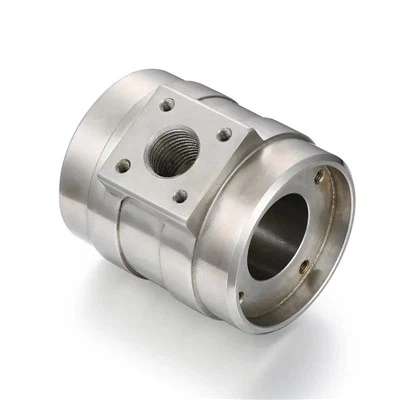
In the realm of manufacturing, CNC lathe machinery parts play a pivotal role in various industries. As a supplier of CNC lathe machinery parts, I have witnessed firsthand the distinct differences between parts used for small - scale and large - scale production. Understanding these differences is crucial for businesses to make informed decisions about their manufacturing processes and equipment needs.
Design and Complexity
For small - scale production, the design of CNC lathe machinery parts often focuses on flexibility and customization. Since small - scale production typically caters to niche markets or specific customer requirements, parts may need to be quickly adapted to different specifications. This means that the design process allows for more rapid prototyping and adjustments. For example, a small - scale manufacturer of custom jewelry might require CNC lathe parts that can create intricate and unique designs. These parts need to be highly precise but also capable of handling a variety of materials such as precious metals and gemstones.


On the other hand, large - scale production emphasizes standardization and efficiency. The design of CNC lathe machinery parts for large - scale operations is optimized for mass - production. Parts are engineered to have consistent dimensions and performance, ensuring that each unit produced meets the same high - quality standards. For instance, in the automotive industry, large - scale production of engine components requires CNC lathe parts that can produce thousands of identical parts with minimal variation. This standardization reduces production costs and increases overall productivity.
Material Selection
Material selection is another significant difference between small - scale and large - scale production of CNC lathe machinery parts. In small - scale production, a wider range of materials can be used due to the lower volume requirements. Manufacturers may choose exotic or specialty materials to meet specific design or performance needs. For example, in the production of high - end audio equipment, CNC lathe parts may be made from materials like titanium or carbon fiber to enhance the product's acoustic properties.
In large - scale production, cost - effectiveness and availability are key factors in material selection. Commonly used materials such as steel, aluminum, and brass are preferred because they are readily available in large quantities and are relatively inexpensive. These materials also offer good machinability, which is essential for high - volume production. For example, in the production of consumer electronics, large - scale manufacturers often use aluminum for CNC lathe parts due to its lightweight, corrosion - resistant, and easy - to - machine properties.
Production Speed and Efficiency
Small - scale production typically has a slower production speed compared to large - scale production. This is because small - scale operations often involve more manual intervention and less automation. Each part may require individual attention and adjustment, which can slow down the overall production process. However, small - scale production offers the advantage of being able to quickly respond to changes in customer demand or design requirements.
Large - scale production, on the other hand, is characterized by high - speed and highly automated processes. CNC lathe machinery parts for large - scale production are designed to operate at maximum efficiency, with minimal downtime between production runs. Advanced automation technologies, such as robotic loading and unloading systems, are often used to increase productivity. For example, in the production of mobile phone components, large - scale manufacturers can produce thousands of parts per hour using highly automated CNC lathe systems.
Quality Control
Quality control is essential in both small - scale and large - scale production, but the methods and standards may differ. In small - scale production, quality control is often more hands - on. Each part is carefully inspected by skilled operators to ensure that it meets the required specifications. This personalized approach allows for immediate feedback and adjustments during the production process.
In large - scale production, quality control is more systematic and data - driven. Statistical process control (SPC) techniques are commonly used to monitor and control the production process. This involves collecting and analyzing data from multiple production runs to identify trends and potential issues. For example, in the production of aerospace components, large - scale manufacturers use SPC to ensure that each part meets the strict quality standards required for flight safety.
Cost Considerations
Cost is a major factor in both small - scale and large - scale production. In small - scale production, the cost per unit is often higher due to the lower volume of production. The cost of tooling, setup, and labor can be spread over a smaller number of parts, resulting in a higher overall cost. However, small - scale production can be more cost - effective for products with low demand or high customization requirements.
In large - scale production, the cost per unit is generally lower due to economies of scale. The cost of tooling and setup can be spread over a large number of parts, reducing the overall cost per unit. Additionally, large - scale manufacturers can often negotiate better prices for raw materials due to their high purchasing volume. For example, a large - scale automotive manufacturer can purchase steel in bulk at a lower price per ton compared to a small - scale manufacturer.
Applications
The applications of CNC lathe machinery parts also differ between small - scale and large - scale production. Small - scale production is often used for producing prototypes, custom - made products, and low - volume specialty items. For example, small - scale manufacturers may produce CNC Machined Car Parts for classic car restoration projects or Communication Equipment CNC Lathe Parts for niche communication devices.
Large - scale production is commonly used for mass - producing consumer goods, industrial components, and automotive parts. For example, large - scale manufacturers produce millions of smartphones, cars, and household appliances each year using CNC lathe machinery parts.
As a supplier of CNC lathe machinery parts, I understand the unique needs of both small - scale and large - scale manufacturers. Whether you are looking for parts for a custom - made project or high - volume production, I can provide you with the right solutions. If you are interested in purchasing CNC lathe machinery parts, please feel free to contact me for a detailed discussion about your requirements.
References
- Groover, M. P. (2010). Fundamentals of Modern Manufacturing: Materials, Processes, and Systems. Wiley.
- Kalpakjian, S., & Schmid, S. R. (2013). Manufacturing Engineering and Technology. Pearson.
- Schmid, S. R., & Kalpakjian, S. (2009). Manufacturing Processes for Engineering Materials. Pearson.