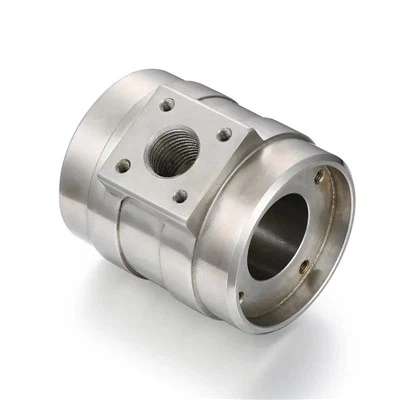
Adjusting the cutting angle for CNC lathe flange parts machining is a critical process that significantly impacts the quality, precision, and efficiency of the final product. As a trusted supplier of CNC Lathe Flange Parts, I understand the importance of this aspect and am eager to share some key insights and techniques.


Understanding the Basics of Cutting Angles in CNC Lathe Machining
Before delving into the adjustment process, it's essential to grasp the fundamental concepts of cutting angles. In CNC lathe machining, the cutting angle refers to the angle between the cutting edge of the tool and the workpiece. There are several cutting angles, including the rake angle, clearance angle, and cutting edge angle, each playing a unique role in the machining process.
- Rake Angle: The rake angle affects the cutting force and chip formation. A positive rake angle reduces the cutting force, making the machining process smoother, but it may also reduce the strength of the cutting edge. Conversely, a negative rake angle increases the cutting edge's strength but requires more cutting force.
- Clearance Angle: The clearance angle prevents the tool's flank from rubbing against the workpiece, thereby reducing friction and heat generation. An appropriate clearance angle ensures smooth cutting and prolongs the tool's lifespan.
- Cutting Edge Angle: The cutting edge angle influences the chip thickness and the distribution of cutting forces. By adjusting the cutting edge angle, we can control the shape and flow of chips, improving the machining surface quality.
Factors Influencing the Cutting Angle Adjustment
Several factors need to be considered when adjusting the cutting angle for CNC lathe flange parts machining:
- Workpiece Material: Different materials have varying hardness, toughness, and machinability. For example, machining a soft metal like aluminum requires a different cutting angle compared to a hard alloy. Generally, softer materials allow for larger positive rake angles to reduce cutting forces, while harder materials may require smaller positive or negative rake angles to maintain the cutting edge's strength.
- Tool Material and Geometry: The type of cutting tool and its geometry also play a crucial role. Carbide tools, for instance, are more wear - resistant and can withstand higher cutting speeds compared to high - speed steel tools. The tool's nose radius, edge sharpness, and overall shape can affect the optimal cutting angle.
- Machining Conditions: Parameters such as cutting speed, feed rate, and depth of cut interact with the cutting angle. Higher cutting speeds may require adjustments to the rake and clearance angles to prevent excessive heat generation and tool wear. Similarly, a larger depth of cut may demand a different cutting edge angle to ensure proper chip evacuation.
Step - by - Step Guide to Adjusting the Cutting Angle
- Tool Selection: Based on the workpiece material and machining requirements, choose an appropriate cutting tool. For flange parts, tools with a suitable nose radius and cutting edge geometry are essential. Consider the Three Or Four Way Precision Turning Parts that can offer precise machining capabilities.
- Initial Setup: Mount the cutting tool on the tool post of the CNC lathe. Ensure that the tool is securely fastened and properly aligned with the workpiece axis. Use precision measuring tools to confirm the initial position of the tool.
- Calculating the Rake Angle: Refer to machining handbooks or use online calculators to determine the recommended rake angle for the specific workpiece material and tool. If possible, conduct test cuts on a scrap piece of the same material to fine - tune the rake angle. A positive rake angle can be adjusted by using shims or by changing the tool holder orientation.
- Setting the Clearance Angle: The clearance angle is typically set based on the manufacturer's recommendations for the tool. However, it may need to be adjusted slightly depending on the machining conditions. An insufficient clearance angle can cause excessive friction and tool wear, while an overly large clearance angle can weaken the cutting edge.
- Adjusting the Cutting Edge Angle: The cutting edge angle can be adjusted by rotating the tool on the tool post or by using a tool with a different cutting edge geometry. A smaller cutting edge angle is suitable for finishing operations, as it produces a smoother surface finish, while a larger cutting edge angle is better for roughing operations to increase the material removal rate.
- Test and Verification: After making the initial adjustments, perform a test cut on the flange part. Measure the surface finish, dimensional accuracy, and chip formation. Analyze the results and make further adjustments to the cutting angle if necessary.
Advanced Techniques for Cutting Angle Optimization
- Dynamic Angle Adjustment: Some advanced CNC lathes are equipped with features that allow for dynamic cutting angle adjustment during the machining process. This can compensate for changes in the workpiece material properties or machining conditions, resulting in more consistent and high - quality parts.
- Simulation and Modeling: Utilize machining simulation software to predict the effects of different cutting angles on the machining process. This can help in optimizing the cutting angle before actual machining, reducing the time and cost associated with trial - and - error.
The Role of Cutting Angle in Different Flange Part Machining Processes
- Turning Operations: In external turning of flange parts, the cutting angle affects the surface finish, roundness, and straightness of the part. A well - adjusted cutting angle can minimize the occurrence of chatter marks and improve the overall dimensional accuracy.
- Facing Operations: When facing the flange surface, the cutting angle influences the flatness and surface roughness. By ensuring an appropriate cutting edge angle and rake angle, we can achieve a smooth and even surface finish.
- Boring Operations: For internal machining of flange holes, the cutting angle is crucial for maintaining the hole's diameter accuracy and surface quality. An incorrect cutting angle can lead to taper, out - of - roundness, or poor surface finish.
Quality Assurance and Inspection
- Surface Roughness Measurement: Use a surface roughness tester to measure the quality of the machined surface. A smooth surface finish not only enhances the aesthetic appearance of the flange part but also improves its functionality.
- Dimensional Inspection: Employ precision measuring tools such as calipers, micrometers, and coordinate measuring machines (CMMs) to verify the dimensional accuracy of the flange part. Any deviation from the design specifications may indicate an improper cutting angle adjustment.
Conclusion
Adjusting the cutting angle for CNC lathe flange parts machining is a complex but essential process. By understanding the basic principles, considering the influencing factors, and following the step - by - step guide, we can achieve high - quality, precise flange parts. As a supplier of CNC Lathe Flange Parts, we also offer other related products such as CNC Lathe Piston Rod Parts and CNC Lathe Cooling Nozzle to meet your comprehensive machining needs.
If you are in the market for high - quality CNC lathe flange parts or other related machining components, we invite you to contact us for procurement and further discussions. We are committed to providing you with the best products and services.
References
- "Modern Machining Technology" by John A. Schey
- "CNC Machining Handbook" by Mark J.ovanovic